Every ring on the dial, named.
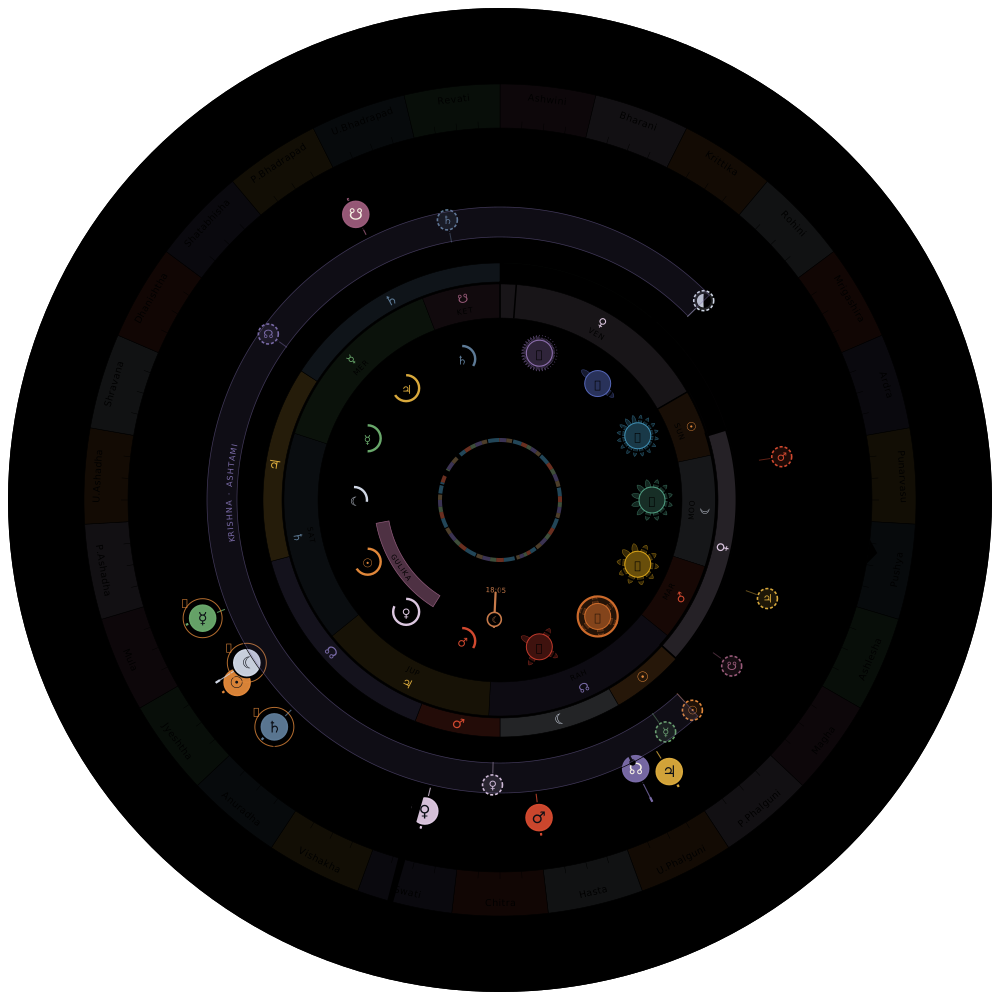
Kaalchakra puts six timescales on one face — the tattva turning every twelve minutes, the dashas across a century. Nothing on it is decorative. Below is the same dial seventeen times over, with one component marked on each.
Two frames run on this plate and it is worth knowing which is which. Everything from the chakra ring inward shares the clock frame — thirty degrees an hour, read against the hour hand. Everything outward is zodiacal, anchored on the signs. The mahadasha ring is the only one measured in years.
The bezel — how this moment stands
The outermost band is not a scale. It is a single verdict on the present moment, built from the running dasha, the transits, the choghadiya and the tara bala: jade when the measures agree favourably, brass when they are mixed, red when they are testing. It is the one part of the dial you can read without knowing anything else.
Sarvashtakavarga — bindus per sign
Twelve small counts, one per sign, sitting just inside the bezel. Each is the total benefic bindu count that sign carries in your chart. Twenty-eight is the classical middling figure — above it a sign supports what it governs, below it the same period delivers less. The twelve always sum to 337.
The rashi ring — twelve signs
The zodiac itself, sidereal, thirty degrees a sign. This ring never moves: it is the frame everything else is measured against. Each sector carries the sign, its Devanagari name and the Kalapurusha limb it governs — Aries the head, Pisces the feet — which is what the Swasthya panel reads a region of the body from.
The nakshatra ring — twenty-seven lunar mansions
Thirteen degrees twenty minutes each, tinted by their ruling graha. This is the ring the Vimshottari dasha is computed from — where your Moon falls here fixes the whole hundred-and-twenty-year sequence — and it is also the ring muhurta weighs most heavily, through the seven-fold class each nakshatra belongs to.
The bhava ring — the twelve houses
Your houses, anchored on the ascendant. The dial draws Sripati bhavas, so a graha can sit in one sign and fall in the neighbouring house — the split a printed sheet shows between the Lagna Kundali and the Bhav Chalit. Both are given in the Graha table.
The natal grahas — the chart you were born under
Nine bodies at their sidereal longitudes at your birth minute, each with its glyph and colour. These never move. Retrograde bodies are marked vakri. Hover any one of them for its sign, nakshatra, pada, dignity and the house it falls in.
The live transits — the sky right now
The same nine bodies where they actually stand this second, drawn inside your natal ring so the two can be read against each other at a glance. This is the band that moves while you watch. A short trail behind each marker shows the direction it is travelling.
Ghatana — when a matter is live
Thin arcs marking the Vimshottari periods whose lords are connected to whichever life area you have selected. They sit on the mahadasha frame because that is the only ring here measured in years. Jade means both period lords touch the matter, which is the classical strong case.
The year ring — the twelve months ahead
A twelve-month band around the present, so the shape of the coming year is visible without leaving the dial.
The mahadasha ring — a hundred and twenty years
The whole Vimshottari cycle laid around the circle, each graha taking the span the system gives it — Venus twenty years, the Sun six. The jade mark is your birth; the needle is where you stand in the cycle now. Click any patch to take the whole dial to that period.
The antardasha ring — inside the running period
The sub-periods of whichever mahadasha is running, on the same frame. Between them the two rings give the dasha to about a month; the Jeevan panel takes it down five levels to the prana.
The chakra column and its petals
The seven chakras with their traditional petal counts — four at the base, then six, ten, twelve, sixteen, two, and the crown. The petal letters are the fifty matrika, checksummed against the Sat-Chakra-Nirupana. The lit chakra is the one the Chakra tab reads the column from, and the same choice rotates the personalised tattva sequence.
Choghadiya and the kaala windows
Two bands on the clock frame. The outer carries the eight day and eight night choghadiya — Amrit, Shubh and Labh sought, Udveg, Kaal and Rog avoided. The inner marks Rahu Kaal, Yamaganda and Gulika. Read these against the HOUR hand: they share its frame, thirty degrees an hour, and the minute hand has nothing to say about them.
The swara ring — which nostril, and when
The alternation of Ida, Pingala and Sushumna across the day, from whichever swara model you have selected. L and R mark the side. The pale ticks just beneath are where the unmodified classical schedule would hand over, so the gap between a tick and the block edge is exactly what your chart moved.
The tattva band — the element inside the breath
A thin band inside the swara ring, subdividing the running block into its five elements. Each holds a few minutes. Under the personalised tantra model the sequence opens on the element of your lit chakra and the minutes are reweighted by your chart’s own element census, so this band is yours and not everybody’s.
Kaarya — the windows for the task you chose
The innermost band. Green marks the next window that is more than merely workable for whichever task is selected, with its start and end times written in when there is room. Every window drawn is still ahead of you — as one passes, the dial moves to the next by itself.
The hands, and the rising degree
An ordinary twelve-hour clock at the centre: hour, minute and a sweeping second hand. Everything on the clock frame is read against the hour hand. Outside, a separate marker follows the degree rising over your horizon this second, which is the one quantity in a transit that depends on where you are standing.
Everything on it answers to a hover.
No part of the dial is unexplained inside the app either. Hover — or tap — any arc, glyph or band and it tells you what it is, which frame it belongs to, and what the tradition reads in it. Click to pin the note; Esc clears it.
The dial in these diagrams is the app's own built-in sample chart, captured from the running instrument rather than drawn by hand — so what is labelled here is exactly what you will see.